Product information
Structural solid timber (KVH)
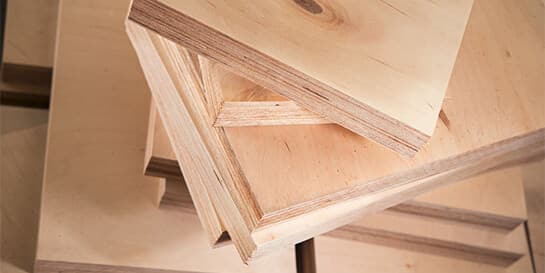
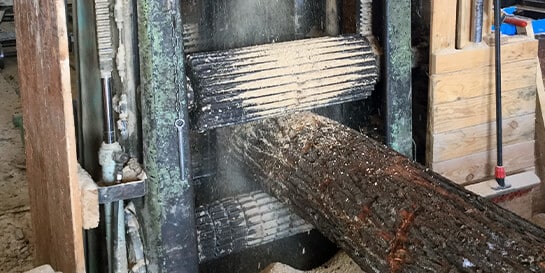
Structural solid timber (KVH) is refined sawn construction timber. Based on an agreement between the German monitoring association and the Federation of German Master Carpenters, KVH must meet increased quality requirements beyond DIN 4074.
KVH is made from softwood squared sections — spruce, Douglas fir, larch, fir or pine — and is differentiated into visible-grade and non-visible-grade variants. It is generally a finger-jointed product made from solid softwood, allowing virtually any length to be produced.
KVH specifications
By regulation, finger-joints must comply with EN 385. EN 338 defines specific characteristic values for density, stiffness and strength. Under DIN 4074-1, sawn construction timber in Germany is classified by dimension and cross-section into squared timber, beams, beam-grade sawn timber, boards, planks and battens.
Properties of structural solid timber
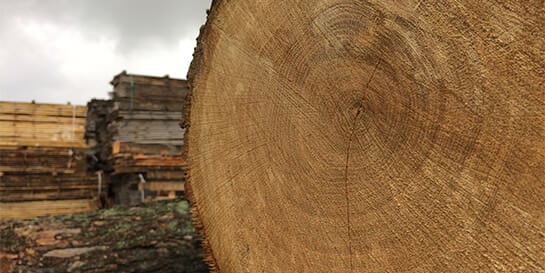
Alongside its low density, KVH is characterised by good workability, high stiffness, load-bearing capacity and durability. Further properties vary by species and the proportions of sapwood, heartwood, wood preservation, processing and other factors.
Under DIN 1052, only certain species are approved for load-bearing applications in Germany — pine, oak and beech. In construction, KVH is used primarily in shell-building work: repairing and erecting roof structures, new builds and repairs of half-timbered houses, and assembly of prefabricated houses. Carpenters are the trade responsible for this work.