7 January 2023 · HOLZ-BARAN GmbH
Wood with versatile uses: pine
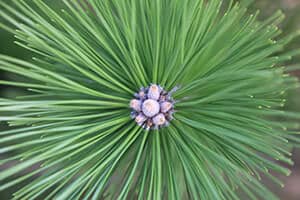
Few trees carry as many characteristic features as the pine. Its markings make its wood one of the most recognisable of all, and the shape of its seed cones is as distinctive as its scent.
The highest recognition value of all, however, belongs to the image of wind-swept trees silhouetted against a coastal landscape. Yet pines growing by the sea represent only a fraction of the world’s total stock.
The pine: a tree that likes it cool
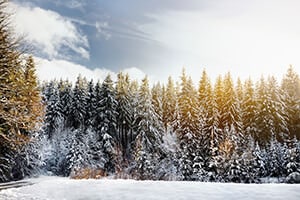
The term “worldwide” applies only in a limited sense — because almost all tree species of the genus Pinus are native to the northern hemisphere. Here they grow preferentially in cooler regions and cool, moist areas. Typical pine habitats are the countries of the Scandinavian peninsula, the Baltic states and North America. Varieties of the trees also occur in east and south-east Asia, in the southern Himalayas and on some Caribbean islands.
Within Germany, the pine is unevenly distributed. Brandenburg records the highest proportion of total tree cover, closely followed by Saxony-Anhalt and Mecklenburg-Vorpommern. In these federal states, the trees account for more than 80 per cent and around 50 per cent respectively of the total forest stock, and have corresponding economic significance.
A brief guide to the tree: general facts about pine species
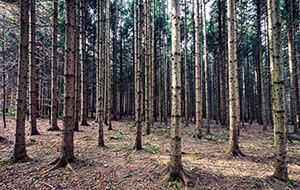
As a fast-growing tree, a pine can put on height quickly. Harvesting, however, only takes place after 100 to 120 years — or occasionally even later when a particular quality is desired. By that point the trees have reached, depending on species, a height of 25–40 m and a mean diameter of 40–60 cm. Their crown, formed by crooked branches, is strikingly irregular and gives the pine its characteristic appearance.
In contrast to deciduous trees such as oak or ash, it does not produce foliage but evergreen needles. These grow in clusters of 2 to 5 individual specimens and reach, in some species, up to 50 (!) cm in length. The varieties native to Germany, however, bear considerably shorter needles.
The size of the cones also varies greatly between individual pine species. Dimensions of between 2 and 60 cm are possible here. As a rule they ripen in the second, rarely the third year, and initially stand upright. Later they hang on the tree or are shed entirely. While the ash lets its fruit cluster be carried away by the wind, the wing membrane of the pine seed is reduced and fused into a kind of thorn.
The enemies of the pine
The differences between individual tree species continue in many areas. Deviations appear not only with regard to the length of needles and cones, but also in terms of disease. For instance, white snow blight (Phacidium infestans) preferentially settles on the Swiss stone pine; its black relative Herpotrichia coulteri exclusively on the mountain pine.
All pine species are threatened by infestation with the rust fungus Cronartium flaccidum. This leads to what is known as Kienzopf — a blister-like, rust-brown deformation of the bark. Furthermore, pathogens such as Ceratocystis or Ophiostoma piliferum can cause blue stain, through which pine wood becomes discoloured and loses the ability to absorb liquid. The result is dying crown tips. By contrast, bracket fungi, brown rot fungus, honey fungus and hen-of-the-woods act at the base: they cause wood rot and root decay.
Animal pests also afflict the pines. Moth species such as the pine moth and the nun moth lay their eggs on them and use the trees as feed for the larvae that hatch from them. And of course insects such as the pine looper, the pine hawk-moth and the pine processionary moth do not bear their names without reason. They also prefer the conifer as a food source and can in extreme cases even bring entire forests to a standstill.
Resinous pine wood — a blessing for the tree
But the pine is a master of self-defence. Its needles, its bark and its wood contain a very high quantity of resin. This serves the tree both to repel predators and for wound healing. While it literally glues shut the mouths of voracious animals, it seals cuts or cracks like a spray-on plaster. Throughout the full length of the trunk, the resin concentration is particularly high, so that pines are even protected against the universally feared bark beetle.
Against infestation by fungi, however, even resin-rich pine wood is powerless. Here only forestry measures help. Observations have confirmed that the probability of fungal colonisation decreases when pines grow alongside other tree species. A similarly effective form of protection is provided by natural habitats, so that monocultures are once again called into question.
Pine as wood with distinctive properties
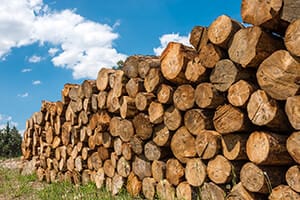
But the demand for pine wood is great, because it possesses a range of highly valued properties. These stem largely from its origin and the conditions in which it grows. Extreme temperature differences and strong winds mean that pine wood is particularly tough and long-lasting. It exhibits high bending strength, load-bearing capacity and elasticity.
Almost all cutting and joining techniques are suitable for processing. Pine wood can be worked both mechanically and manually and can be sawn, milled and peeled just as well as it can be glued, screwed and nailed. When applying paint, lacquer, glaze or stain, one can be genuinely generous: because the wood is very absorbent, sponges or cloths are considerably better suited than brushes.
Pine is also convincing visually. As a so-called heartwood tree, it exhibits clear differences between the outer and inner layers. The pale sapwood shimmers yellowish-white and accounts for around two thirds of the trunk. The core is yellowish-red and takes on a red-brown tone over time. In some pine species the wood also shows pronounced yellow or red nuances.
The annual rings are clearly visible and amount to around three millimetres. Depending on the location of the tree, however, they can also be considerably narrower or broader, with measurements ranging between one and ten millimetres. Clearly recognisable resin channels, along with numerous knots and irregularities, give pine wood its well-known texture.
The most distinctive feature of all, however, is the scent that a freshly felled tree emits. It persists for a considerable time and can still be perceived even when the pine has been cut into boards or otherwise further processed.
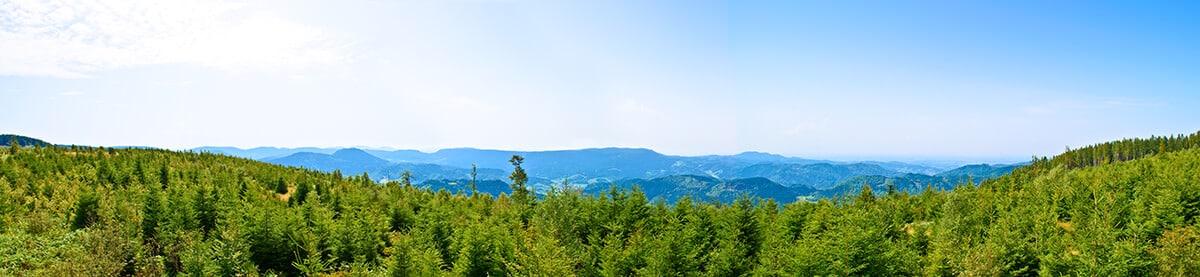
The uses of pine…
The possible applications of pine wood and other components of the pine tree are diverse. They go far beyond its former use as fuel and as a source of light, though it remains relevant for these purposes today too.
… as firewood
Pine achieves its above-average calorific value of 1,700 kWh per solid cubic metre (srm) or 4.4 kWh per kg in the form of
- split logs,
- wood chips,
- wood pellets and briquettes.
Offcuts and production residues of pine wood are also used in heating plants and combined heat and power plants.
… as a raw material for paper production
Pine wood also plays a key role in the production of paper and cellulose. Its fibres are considerably longer than those of deciduous trees, felt together more readily and thus impart a higher strength to the products derived from them.
… as an ingredient in care and cosmetic products
Pine needles are a very well known additive in foot baths and cold remedies. The essential oils are used for their production.
… as construction and structural timber
Indoors, the wood of these trees forms a sought-after, load-bearing and long-lasting raw material for
- roof structures,
- wall and ceiling frameworks,
- wall and ceiling cladding,
- window frames and shutters, and
- doors and gates.
Pine wood also serves, with its well-known structure, as a natural building material for furniture such as bed frames, wardrobes, desks, dining room furnishings and so on.
… in landscaping
As wood for outdoor use, pine is often impregnated or otherwise made weather-resistant. Otherwise there is a risk of blue stain or fungal infestation, which can have a considerable impact on load-bearing capacity and durability. After appropriate treatment the wood serves as material for
- play equipment,
- fences,
- pergolas,
- arcades,
- decking surfaces
and other garden or landscaping structures. Pine is also used as a solid raw material for
- masts,
- posts and
- piles
in harbour construction and mining.
Pine at HOLZ-BARAN GmbH
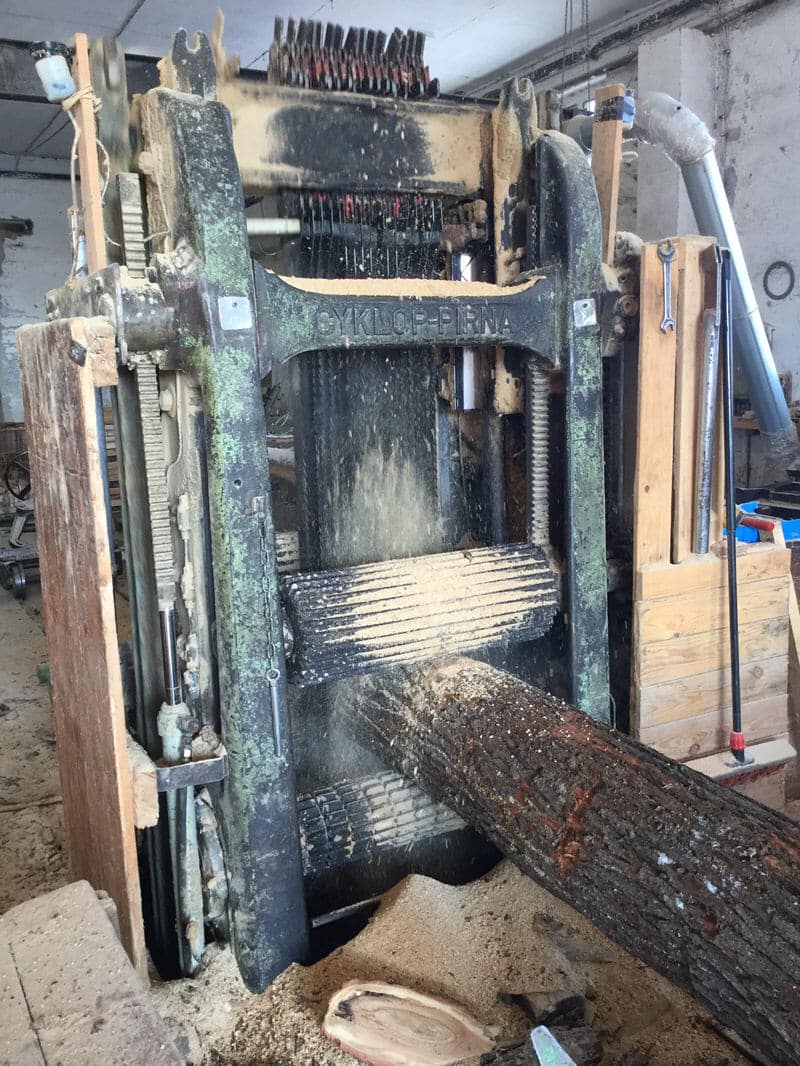
At HOLZ-BARAN GmbH we use pine wood
- as construction timber or for interior fitting-out,
- for floor design, and for the construction of
- staircases and their associated balustrades
and above all for the production of
- fence boards and fence slabs, fresh or seasoned,
- as well as affordable ranch and bonanza fencing.
Pine wood is also available from us as a planed board (tongue-and-groove).
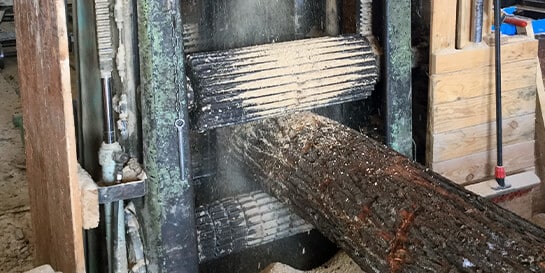
We process the trees in our own sawmill near Leipzig and have the pine cut into boards of the appropriate size. We then prepare the cut wood so that its positive properties are preserved over a long period. The wood for interior fitting-out and joinery work is dried in a drying chamber before being processed.
For use in enclosed spaces we offer you five different collections to choose from. Information on these is available from our trained staff on request. They can be reached by telephone on weekdays between 7:00 and 16:30.