20 January 2023 · HOLZ-BARAN GmbH
Knowledge & tips on oak wood
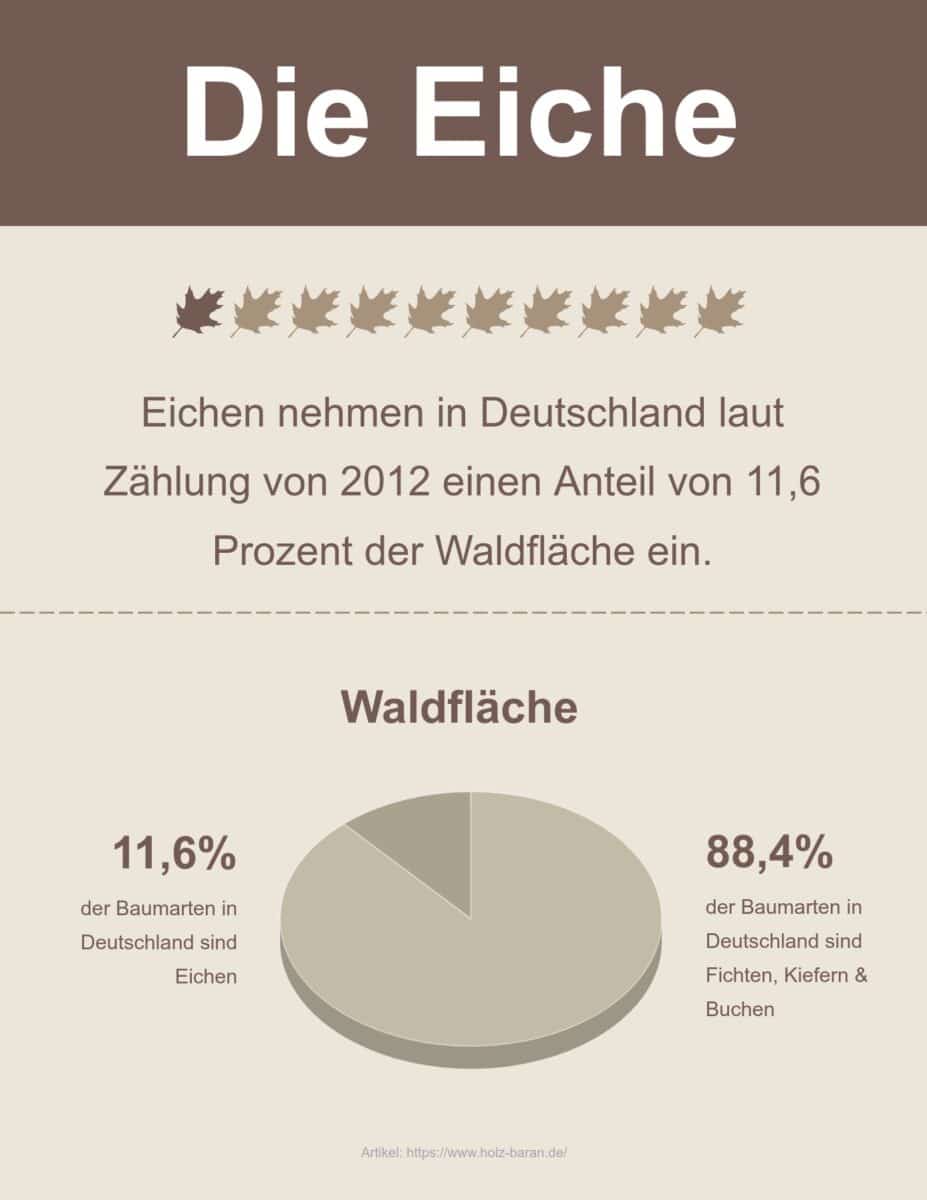
According to the 2012 census, oaks account for 11.6 per cent of Germany’s forest area. The oak tree is thus the second most common tree in Germany and is used in many different ways, both in the furniture industry and in other areas of production.
With its many sub-species, the oak also ranks among the leading trees worldwide and enjoys great popularity across the globe.
The oak has also become indispensable in the world of food and drink. Wine, whisky and cognac are typically aged in oak barrels, where they acquire their characteristic colour and unique aroma.
The oak as a tree species
The oak is what is known as a light-demanding species. This means that oak trees cannot grow and thrive in the shade of other trees. For this reason they grow particularly quickly in their early years, and their main growth phase is already behind them after 15 to 20 years.
How old can an oak get?
The lifespan of the trees is, however, considerably longer. An oak can comfortably live to 800 years, and some large oak forests can boast a number of very old and well-grown trees. Among the oldest known oaks in Europe is the 1,000-year-old oak from Bad Blumau in eastern Styria, which was already documented in a written record in the year 990. Germany’s oldest oak, by contrast, stands in the district of Borken. Its age is estimated at a staggering 1,500 years. Even if only a small proportion of oak trees reach such an advanced age, the fact that they can do so says a great deal about the stability and resilience of oak wood.
Different varieties of oak
The diversity of species within the oak genus is remarkable. Botanically, these plants are assigned to the genus Quercus. In science, more than 600 different sub-species can be distinguished. In everyday life, however, we mainly encounter three different types of oak:
- Turkey oak
- White oak
- Red oak
White oaks are particularly widespread in Europe. Red oaks, on the other hand, are found mainly on the American continent and are generally planted in European parks at most. You will therefore encounter an occasional individual tree here and there, but no oak forests of any significant size.
Oak leaves and oak bark
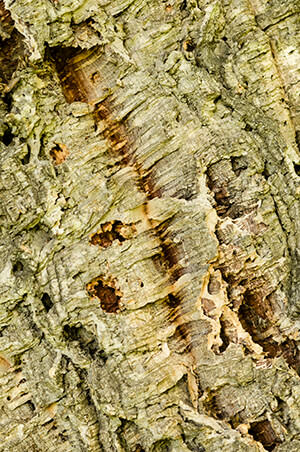
For many years, oak bark was not only a popular medicine but also integrated into many production processes. The rough oak bark provides, through its lichens, mosses and insects, a distinct habitat for many animals and animal species. But humans also made use of the bark’s high tannin content. The bark was used, for example, by tanners to tan leather, so that in many regions of Germany entire oak forests were planted solely for that purpose. In areas such as the Eifel, the Westerwald and the Siegerland, these oak forests still shape the face of the landscape today, even though the forests have long since ceased to be used for their original purpose.
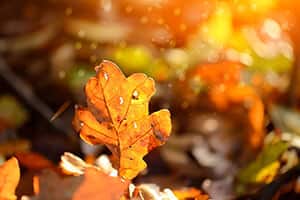
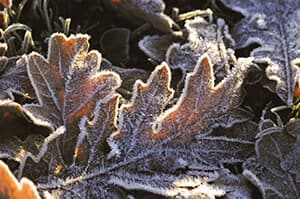
The tree’s leaves are also distinctive. On the one hand, the oak leaf can be recognised almost instantly thanks to its size and characteristic shape. On the other hand, the tree unfurls its leaves considerably later than all other tree species in Germany. This is due in no small part to the fact that this species needs particular warmth to kick-start its own metabolism. Thanks to their size, the leaves can supply the tree excellently, and by converting solar energy into sugar and starch they ensure consistent growth of the oak tree.
Acorns: how oak forests come to be
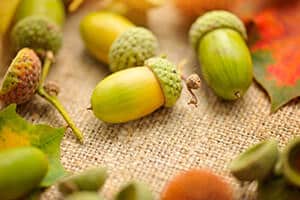
Acorns are the fruit of the oak and are shed by the tree in autumn. The tree is thereby attempting to increase its own offspring and reproduce. Because acorns are enormously rich in energy, however, most of them are eaten by forest animals.
The high tannin content makes the raw acorn inedible for humans, whereas wild animals such as wild boar eat them with relish. In earlier times there were indeed oak forests planted solely to provide fodder for pig farming. The value of a forest was partly judged by how well suited it was for fattening pigs.
In times of hardship — including directly after the Second World War — acorns were also eaten by humans after roasting, boiling and grinding, or drunk as a coffee substitute. The heating process removed most of the tannins, making the acorns digestible for humans as well.
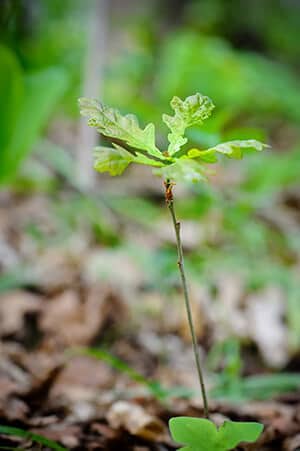
If the acorn is neither eaten nor collected by humans, a new tree can grow from it. To do so, however, the acorn must first survive the winter. It also needs the cold of winter in order to begin germinating at all.
For a new tree to emerge, many factors must therefore come together in precisely the right way. Nevertheless, the species has managed to survive for an enormously long time. This is due in no small part to the sheer number of acorns shed by the tree, which naturally increases the chance of a new tree taking root.
Oak wood and its applications
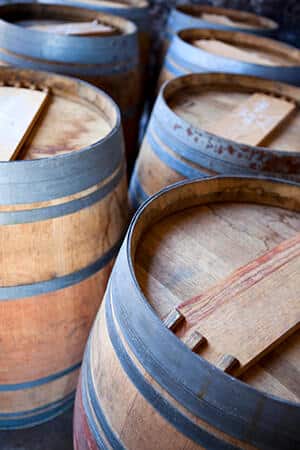
When people think of oak trees today, it is the wood that first comes to mind. The wood of this species can be used in many different fields of application. This is due above all to the excellent inherent properties of oak wood.
Oak wood is fundamentally very hard, strong and durable, and possesses a very high resistance to fungi and salt water. It is therefore not surprising that this wood was regularly used in earlier times in shipbuilding as well as in barrel production and construction.
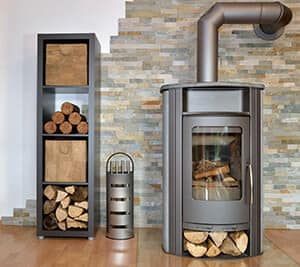
The offcuts produced during processing were also very popular as firewood, since the wood has a very high calorific value and is characterised by low sparking and a great deal of glowing embers.
Today oak wood is still very popular in many fields of work. While we are no longer dependent on the wood’s long lifespan, and its many positive properties play only a minor role today, the wood remains extremely sought after above all among furniture makers, thanks to its high resilience and unique appearance.
Advantages and disadvantages of oak wood
Oak wood can accordingly be used in an extremely wide range of applications. Among the advantages of this hardwood are its very long durability and weather resistance. Its attractive surface texture and robustness are equally convincing. For this reason the wood is used both outdoors and indoors, and also offers a reliable option in the ground and under water. Even untreated, the wood can endure very well in such environments.
There are also advantages and disadvantages when working with oak wood. First of all, the wood warps very little and can therefore be used with great flexibility. However, oak wood is prone to cracking and must be treated with corresponding care. The tannins contained in the wood can also cause nails and screws within the wood to begin rusting. In addition, the wood can discolour quite easily.
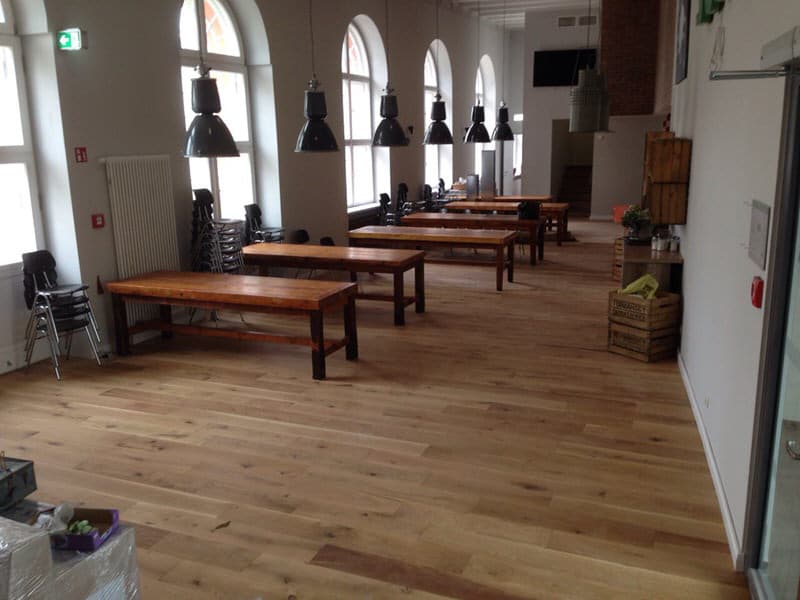
On the positive side, the wood of this species can generally be worked very well. It can be stained, varnished, smoked or lacquered without difficulty, and takes wood preservatives very well, for example.
Current uses for oak wood include solid wood furniture, wooden floors, barrels and use as construction timber. Thanks to its high stability and strength, oak wood is also used as construction timber on many building sites. The wood is also used for restoration work — on half-timbered houses, for example — where entire beams can easily survive several hundred years.
Oak wood as a plank floor
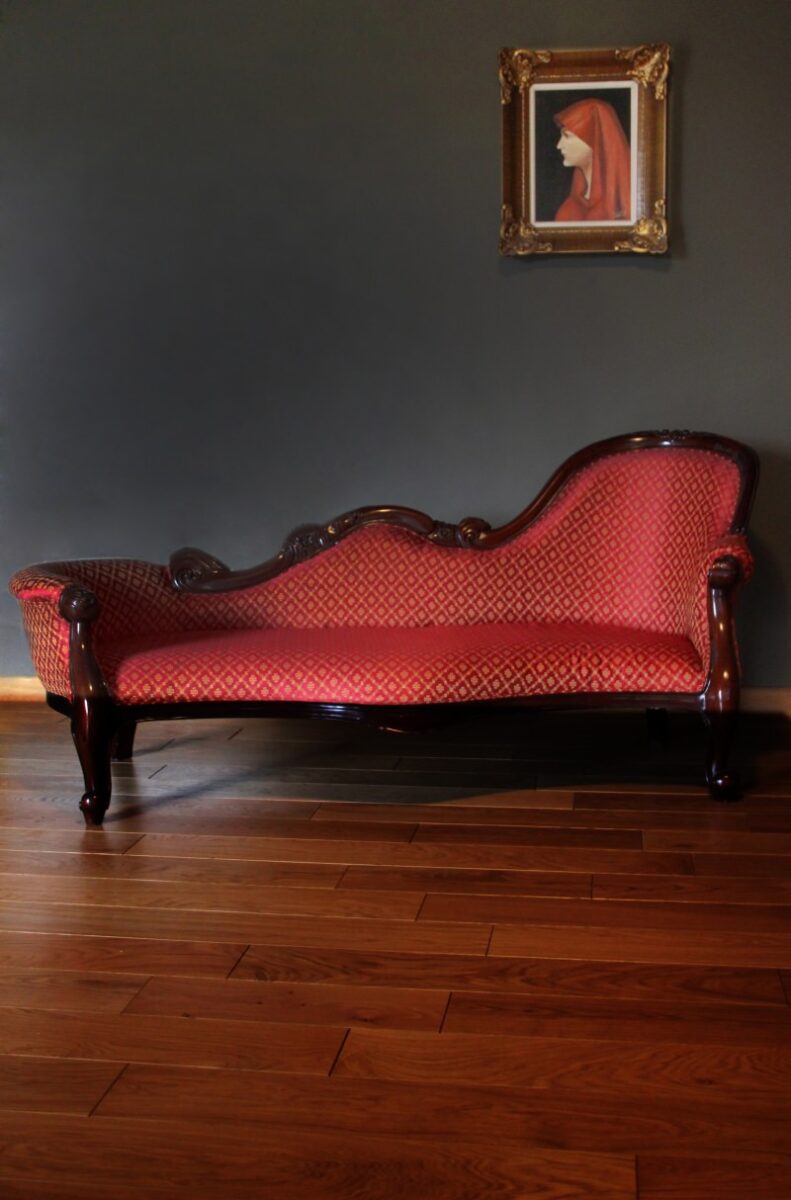
Oak planks are enormously popular. Not only does the tree produce wood with a beautiful grain, but the wood used for plank floors can also be finished in many different ways. This creates entirely new and fresh elements that can be combined to create unique living environments. Oak wood planks need not always conform to the old standard, but can also appear young and bold, giving a room more character.
Modern oak planks naturally also bring the diverse advantages of oak wood to bear as a plank floor. On the one hand, the wooden floors are extremely robust and are therefore designed for long-term use over many years. The floors can also be maintained very easily and sanded down again when needed. This preserves the characteristic appearance even after years of use. Oak wood also offers an additional advantage that should not be underestimated, thanks to its very high density: it serves excellently as thermal insulation, absorbing the warmth of the room deep into its fibres. As a result, the floor fitted with oak planks remains pleasantly warm and feels very natural underfoot. This effect is particularly pronounced with high-quality solid wood planks. If you also combine solid wood planks with colour-matched skirting boards, this can enhance both the thermal and visual quality of the room and its design.
Oak wood as construction timber and firewood
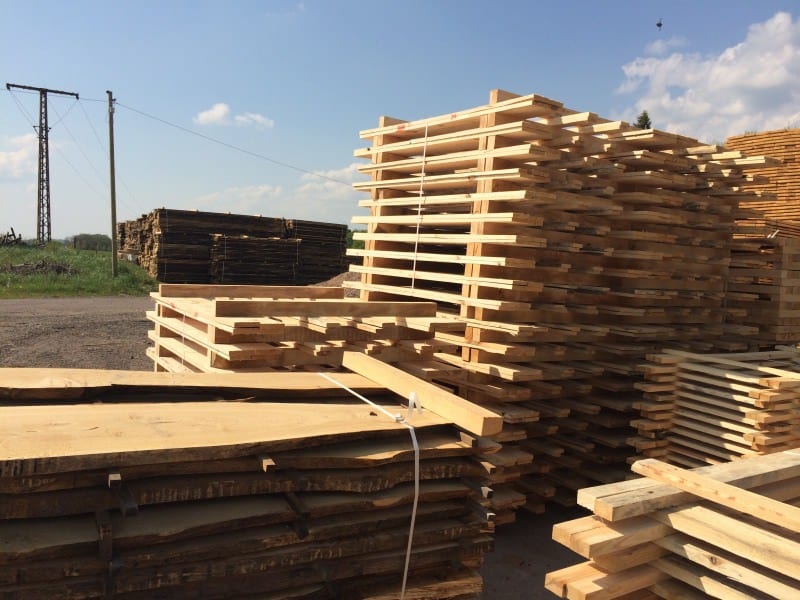
In addition to its use as a plank floor, oak wood is used above all as construction timber and firewood. Here too, the positive properties of the wood play a decisive role. The species is particularly well suited for use as construction timber thanks to its very high resilience. Unlike other woods, this species does not need to be laboriously pre-treated but can be used directly on the building site. Whether for supports, formwork or the many other applications in construction: oak wood enables many projects to be completed quickly and safely.
But oak is also extremely popular as firewood. And there is more than enough firewood, since it is generally a by-product of processing. After all, the aim is always to use and process the entire tree as far as possible. While the large, straight sections of the trunk are ideal for furniture making or the production of oak planks, the smaller and larger branches of the species are often excellent for use as firewood.
The firewood is very hard and above all extremely energy-rich, so that a long, even burn can be achieved. A great deal of glowing embers are also produced, which further enhances and prolongs the heat output of a stove. As firewood, oak wood is therefore ideally suited and is regularly used in stoves across Germany. In addition to pure firewood, oak briquettes are also an option, offering further advantages. Because through oak briquettes, virtually any part of the tree can effectively be used as firewood and thus put to ecologically sensible use.
Local production in our own sawmill
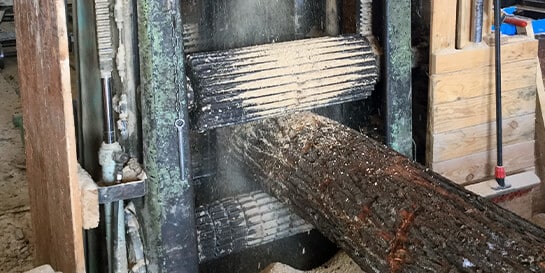
In order to ensure consistently high quality in our timber trade, we have opted for the solution of operating our own sawmill. On the one hand, this allows us to guarantee that the entire tree can be processed effectively. In addition, our sawmill near Leipzig enables us to respond extremely flexibly to the wishes of our customers. In doing so, there is always one thing to bear in mind.
As a timber merchant we offer you, wherever possible, the full range of wood from this species for sale. Whether you need firewood, construction timber, or would like us to produce custom-made solid wood planks or skirting boards for you. And quality has its price, unfortunately. However, you should not focus on price alone. Because in our timber trade we offer you comprehensive advice on all our products. You also have the assurance that we handle the valuable raw material of nature with care and pay attention to our ecological footprint. Feel free to take advantage of our comprehensive and personal consultation before purchasing the products you require. Because a clear conscience towards nature and an appreciation for products made from natural raw materials can go very well hand in hand.
Our video about the oak